Current Mortgage Rates and What They Mean for You
Interest rates are always making headlines because they directly impact how much house you can afford. Even a small shift in the market can change your monthly payment. Understanding where rates stand today helps you plan your budget accurately.
Where Rates Are Right Now
As of late July 2026, the current average 30-year fixed mortgage interest rate is 6.75%. If you are looking to tap into your home equity, today's average 30-year fixed refinance rate is sitting around 6.85%. These numbers fluctuate daily based on inflation and the broader bond market.
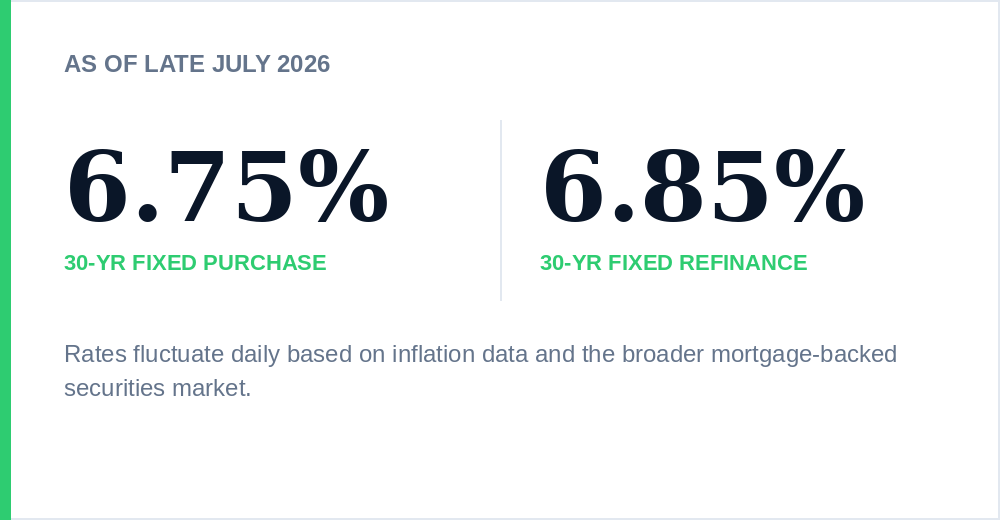
t.
How Rates Affect Your Buying Power
Your interest rate dictates how much money you pay the lender over the life of the loan. A lower rate means a lower monthly payment and more purchasing power. When rates are higher, buyers often have to look at slightly lower price points to keep their monthly budget comfortable.
Getting the Best Possible Rate
The advertised national average is not necessarily the exact rate you will get. Your personal rate is heavily influenced by your credit score and the size of your down payment. As a Mortgage Broker, Quazel shops your file across multiple wholesale lenders. We do the heavy lifting to find you the most competitive terms available.
Contact a Loan Officer today to see what interest rate you currently qualify for. We can lock in your rate to protect you from future market increases.
Expect to close one week early.
Frequently Asked Questions
What is the current average mortgage rate?
As of late July 2026, the current average for a 30-year fixed mortgage is 6.75%.
Why do mortgage rates change every day?
Mortgage rates are tied to the broader financial markets, specifically mortgage-backed securities and the 10-year Treasury yield, which shift daily.
How can I get a lower interest rate?
Improving your credit score and increasing your down payment are the best ways to qualify for a lower interest rate.
Should I wait for rates to drop before buying?
Trying to time the market is risky because home prices may increase while you wait for lower rates.